
Jetting head and solder-ball feed path
Specified as part of the relevant application and system configuration.
Integration component
The jetting module is relevant when a broader automation platform already exists and the soldering function needs to be engineered into that platform. The module itself is only one part of the process: ball delivery, energy control, motion, positioning, fixture design, software and application support remain connected decisions.
What the system is
The jetting module is relevant when a broader automation platform already exists and the soldering function needs to be engineered into that platform. The module itself is only one part of the process: ball delivery, energy control, motion, positioning, fixture design, software and application support remain connected decisions.
Machine structure
The system connects material delivery, energy, positioning, workholding and programmable control. The precise relationship is defined through the application and sample process.
Specified as part of the relevant application and system configuration.
Specified as part of the relevant application and system configuration.
Specified as part of the relevant application and system configuration.
Specified as part of the relevant application and system configuration.
Specified as part of the relevant application and system configuration.
Specified as part of the relevant application and system configuration.
Process workflow
Integration options
Mounting and cable routing review
Host motion-controller coordination
Vision system handoff when required
Safety and enclosure engineering
Commissioning plan for the completed cell
Engineering notes
The available information supports a practical engineering conversation. The final configuration follows the selected system and sample result.
A module is not a drop-in guarantee; integration requires an engineering review.
The host machine must present the joint location repeatably and safely.
Actual output, process rate and positioning accuracy are determined by the full cell configuration.
Real process evidence
Real supplied process video and frames show the head, workpiece, fixture and repeat sequence without audio autoplay.
Supplied process video
Supplied footage showing the workpiece / fixture and repeated jetting context.
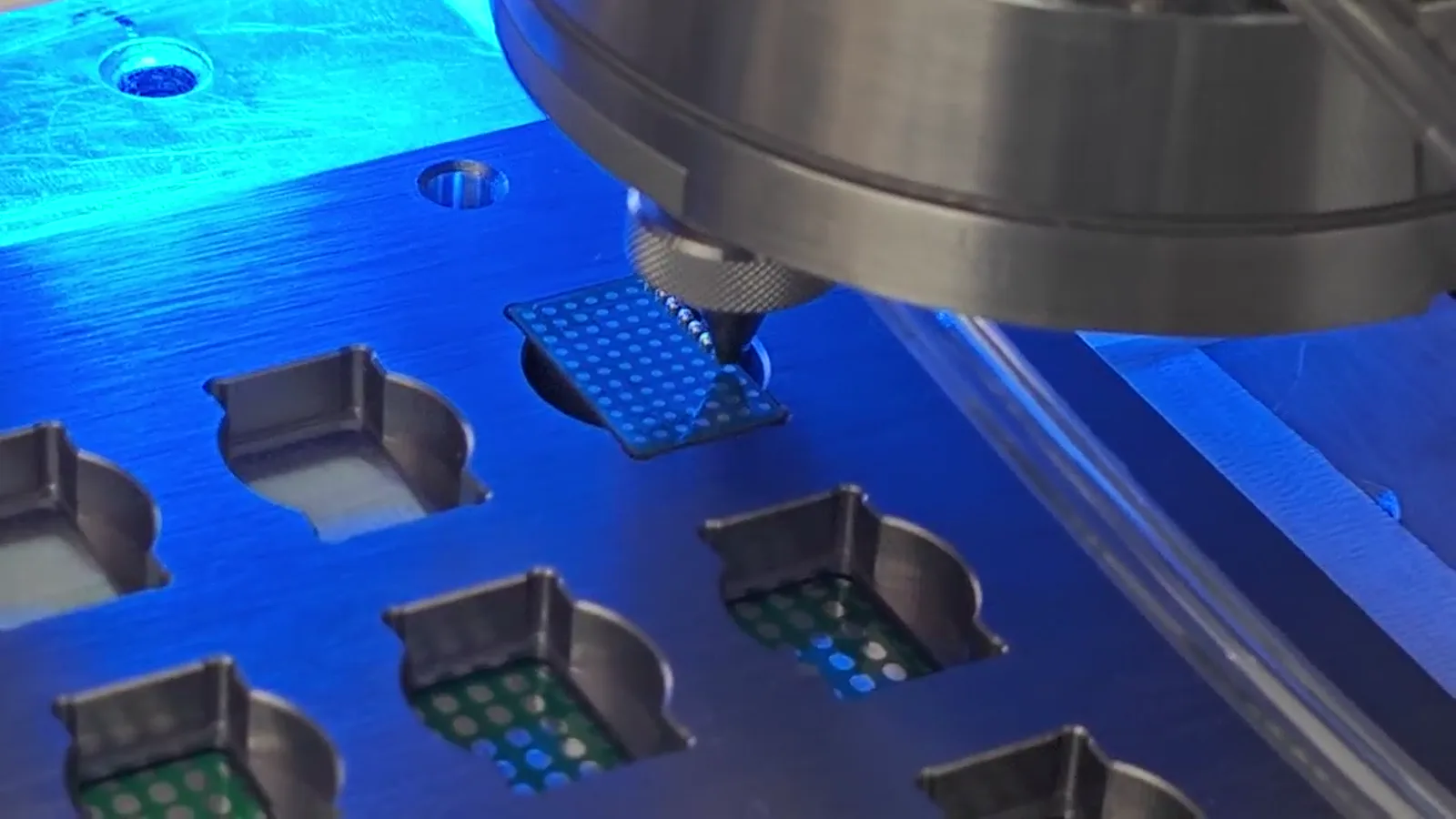
The supplied process video shows a jetting head, fixture support and multiple workpiece positions.
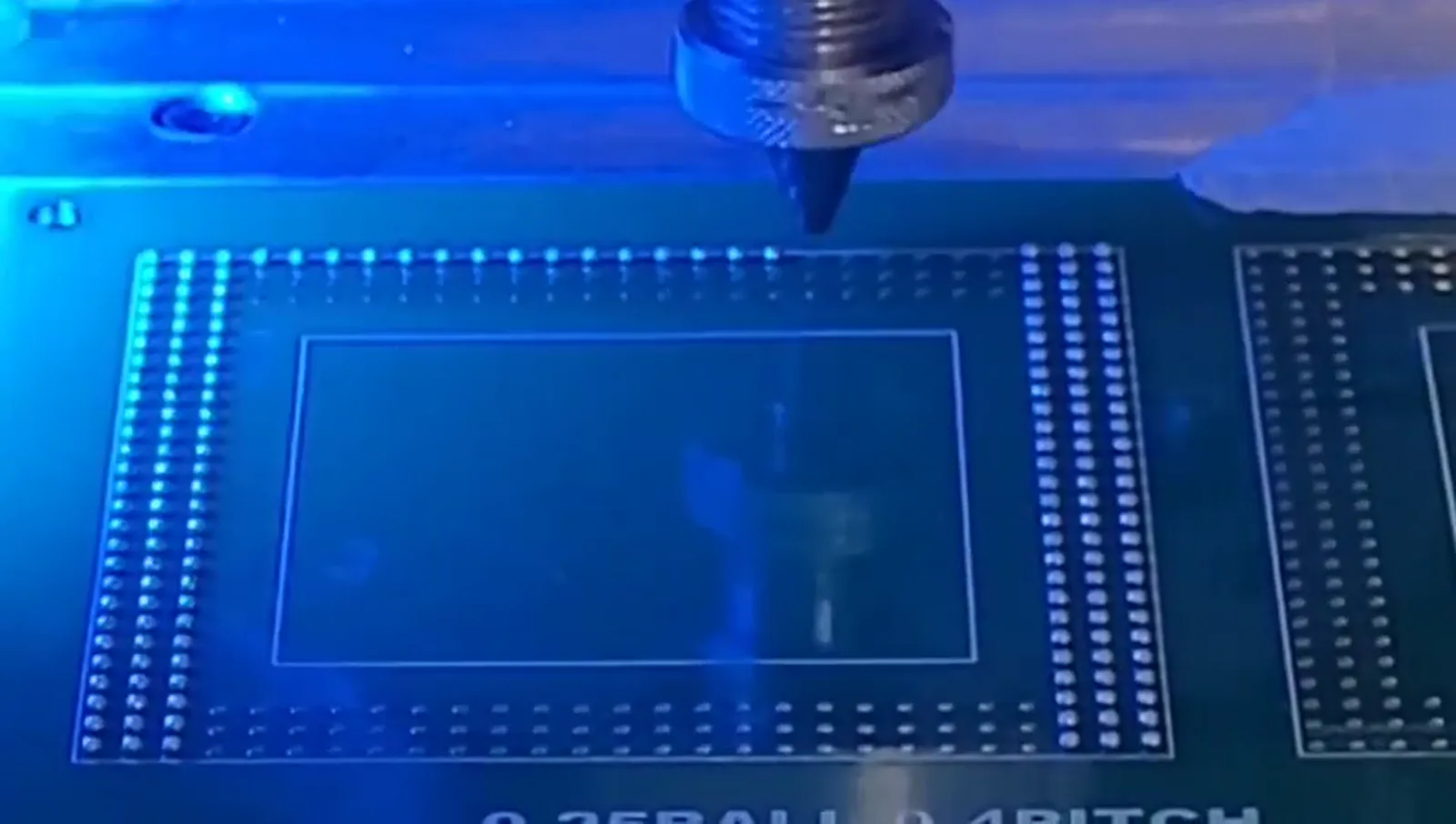
Array-processing context from supplied process footage.
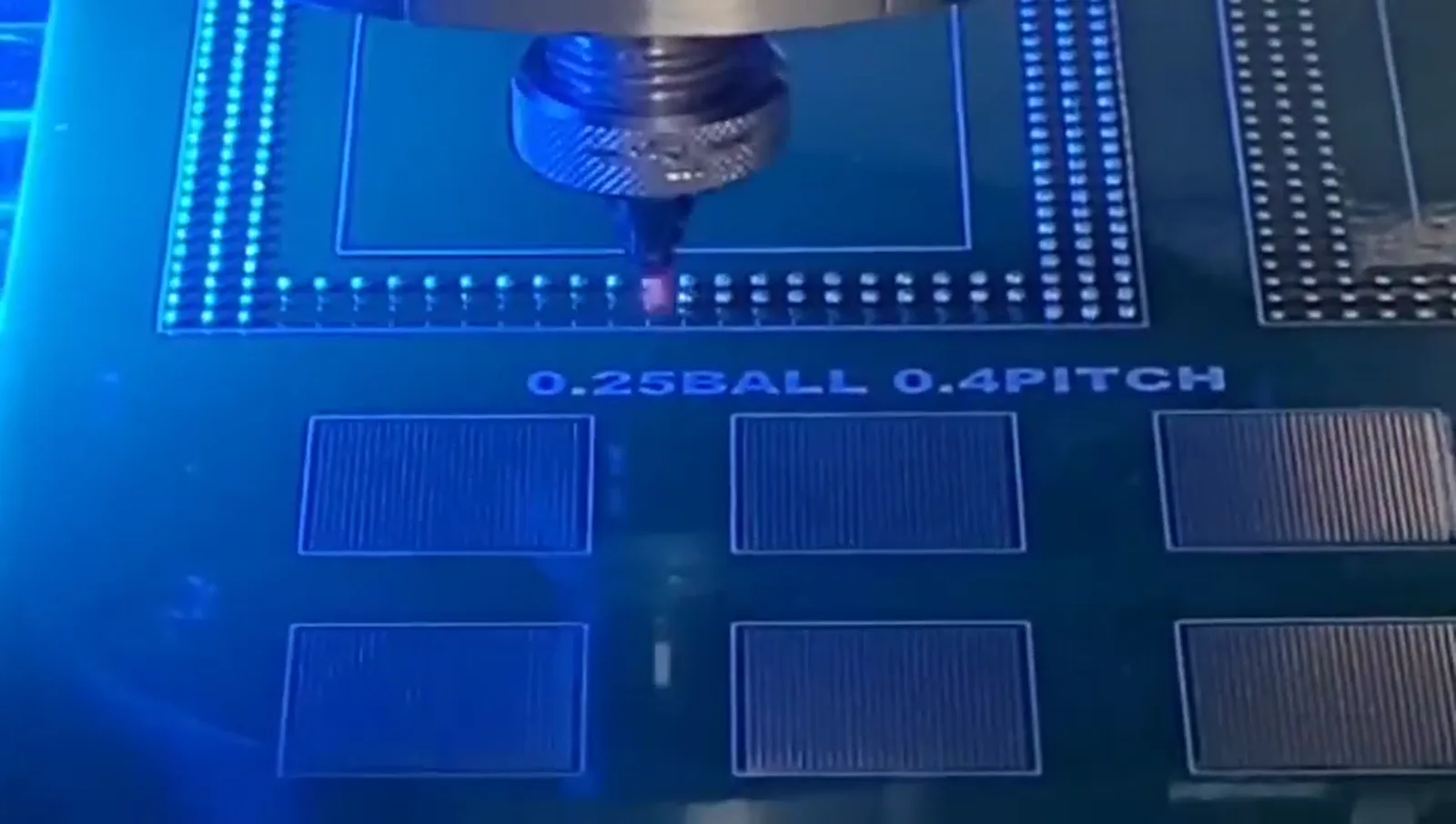
Demonstration of 0.25 mm solder ball processing on a 0.4 mm pitch test pattern.
Visible FAQ
Answers remain application-led and avoid generic performance promises.
Potentially, following a review of mechanics, controls, safety, workholding and application samples.
They should be agreed as part of the automation engineering scope, using the host machine documentation and process requirements.
Related engineering paths
Internal links are selected for application relevance rather than placed as an artificial SEO list.
Application considerations for localized laser solder ball jetting around camera-module assemblies.
Explore →Engineering evaluation factors for laser soldering of VCM-related components.
Explore →Considerations for localized solder-ball jetting on flexible printed circuits.
Explore →A process-evaluation approach to sensor soldering with localized laser heat input.
Explore →Have a micro-soldering application to evaluate?
Share drawings, sample photographs or soldering requirements. The engineering discussion can connect the component to a suitable process and machine configuration.