
Start by stating the precise question
Write down the one question the sample is meant to address before arranging the run. The question can concern a named workpiece position, the proposed way of presenting the workpiece, the use of a mechanical datum, or whether an optional vision reference should be included in the review. It should identify the sample or drawing revision, the target location and the observation that will be used to discuss the result. This prevents the scope from expanding after an image is available. For example, an evaluation can ask whether a stated fixture-and-datum arrangement places a specified target in a usable relationship to the nozzle for the documented process sequence. It should not be phrased as a broad statement about every part in a product category. Keep the question separate from the anticipated answer. The record can list the process facts that are known—individual ball feed and separation, melting at the nozzle and gas-assisted transfer toward a defined position—without assuming an untested outcome. If more than one position, fixture concept or reference method is to be reviewed, name each as a separate condition. A sample comparison is readable only when the conditions being compared are explicit.
Make the target position and part presentation visible
The intended position needs an unambiguous reference on the workpiece. Supply a complete view and a close view, then mark the target in a way that can be related back to the actual sample. Include any available drawing or location reference and identify the orientation in which the workpiece will be held. The aim is not to infer a target from an image alone; it is to give everyone reviewing the sample the same definition of the position toward which the molten solder is to be transferred. Describe how the workpiece is presented to the fixture and which feature, edge or other datum is proposed for locating it. Also identify whether the target can be approached in that presentation and whether nearby geometry changes the proposed arrangement. These are planning inputs, not conclusions about suitability. A clear presentation record makes it possible to distinguish a test performed on a loose sample from one performed in the intended support arrangement. It also gives a later reviewer a way to tell whether an apparent difference comes from the stated target, the orientation or the workholding arrangement. Without that context, a before-and-after view has limited value as technical evidence.
Record the documented process sequence without adding an outcome
Use the supplied process description as the baseline for the sample record. Individual solder balls are fed and separated before the melting step. Laser energy melts the ball at the nozzle. Gas-assisted transfer then moves the molten solder toward the defined workpiece position. Write that sequence in the record together with the sample condition being examined. Doing so keeps the evaluation anchored in the known mechanism rather than in a shorthand label such as “laser soldering.” It also makes clear that the sample is reviewing a connected sequence: ball delivery, melting at the nozzle and transfer toward a position that has been defined by the workpiece setup. Do not add unobserved steps, material behavior or conclusions about the workpiece to that description. If the run has several targets, record the identity and order of the targets, not a presumed performance result. If a supplied image is used in the discussion, caption it as evidence of the stated sample condition only. An image can help identify the sample, the target area or an observable comparison. It cannot, without an agreed inspection method and the supporting record, establish claims beyond what the sample review was set up to observe.
Evaluate fixture, motion, datum and optional vision as one chain
The nozzle-to-workpiece relationship is created by the complete position arrangement. The fixture supports the workpiece presentation. The datum supplies the reference used for the defined position. Motion relates the process head to that reference. Vision may be included where the application requires an image-based reference, but it should be documented as part of the same chain rather than as a stand-alone answer. For the sample, record the fixture contact or support concept, the proposed datum, the intended motion relationship and whether vision is used. Where vision is used, identify the feature that is being used as the reference and how it relates to the stated target. This does not require turning the sample into a claim about every future setup; it allows the result to be tied to the setup that was actually reviewed. The supplied documentation cites ±10 μm vision positioning for one described system. Keep that reference attached to that described system and its configuration. It is not a general positioning result for a different fixture, part, datum or image condition. If any element of the reference chain changes after the sample, record the change as a new condition instead of silently carrying the earlier observation forward.
Use documented configuration values as scope, not as a recipe
Several supplied values can help organize the evaluation, provided they are not combined into a universal specification. The documentation describes approximately 0.2–0.9 mm solder-ball application for a configuration. It also refers to 100/200 W laser configuration and up to 6 dots/s for a described configuration. These values identify configuration topics to record and discuss; they do not select a ball, laser configuration or complete process sequence for a new sample. In particular, the dot-rate reference is not a complete sample or production timing statement. The evaluation record should therefore name the selected sample condition and leave any unresolved choice visibly unresolved. A reviewer can then see which information was supplied, which arrangement was used for the sample and which decisions remain open. The supplied footage marked 0.25 mm ball and 0.4 mm pitch has an equally narrow meaning. It is a test-pattern demonstration of 0.25 mm solder-ball processing on a 0.4 mm pitch test pattern only. It does not define a universal minimum pitch, a general fine-pitch limit or a result on another workpiece. Presenting it with that exact scope preserves the value of the demonstration without extending it into an unsupported claim.
Define the review record before the sample is judged
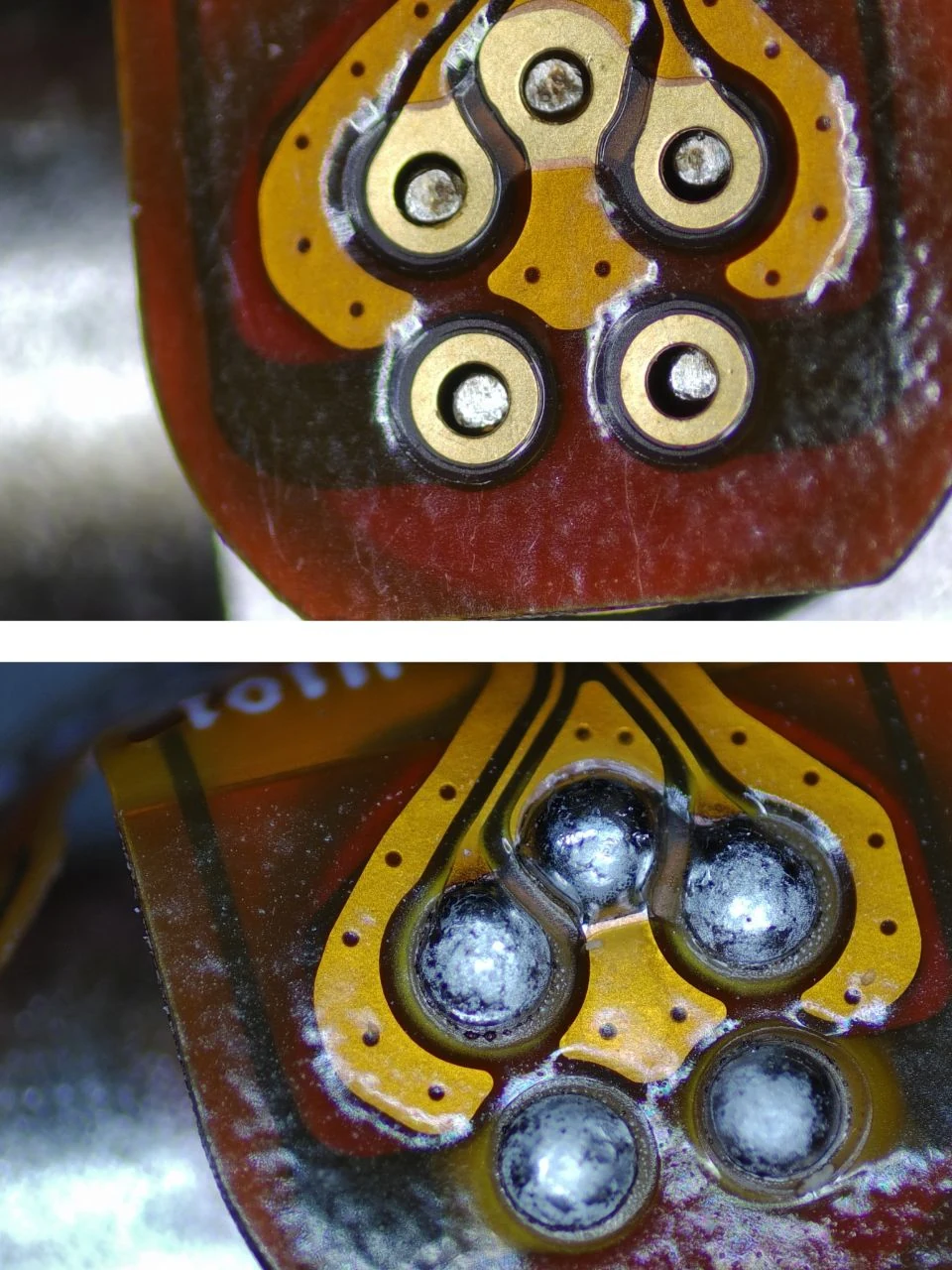
Agree in advance what will be retained for each stated condition. A concise record can identify the sample, its orientation, the marked target position, the fixture and datum arrangement, the motion and optional vision approach, the documented process sequence, and the source of each image or observation. It should also name the customer-defined basis for discussing the result. This is not a request to infer an acceptance standard from a photograph. It is a way to make the sample review traceable to the criterion the application owner has chosen. Use consistent labels when more than one condition is compared. For instance, do not place two images side by side without stating whether the fixture, datum, sample orientation or target location changed. Retain the limitation alongside the observation: the record describes the supplied sample under the stated setup. It does not silently become evidence for an unrelated design, a different reference method or a changed presentation. The supplied sample comparison image can be used as visual context for this discipline. Its presence does not identify a customer, a production setting or an approval state. The most useful record lets a later engineering discussion separate what was actually shown from what still needs a defined sample condition.
Conclude with a bounded next decision
After review, return to the original question and state the answer in the same limited terms. A useful conclusion might say that a named target, presented in a stated fixture and datum arrangement, was reviewed with the documented feed, melt and gas-assisted transfer sequence and against the stated customer-defined criterion. It can also identify what should be reviewed next: another target, a revised fixture arrangement, a different datum, or a decision about whether vision should be included. Avoid converting a limited observation into a general machine, material, reliability, yield or cycle-time statement. The supplied configuration references do not support that extension, and neither does a single image. If the workpiece, target pattern, fixture, datum, motion relationship or review criterion changes, treat the changed arrangement as a new evaluation condition. This gives the sample program a clear path without implying that a prior observation transfers automatically. The final record should preserve the question, the setup, the documented process context, the observations and the next decision. That makes the sample useful both to the immediate discussion and to later configuration work, while keeping every conclusion connected to the evidence that supports it.